
How Market Volatility Is Rewriting Procurement Strategy in Today's World Order
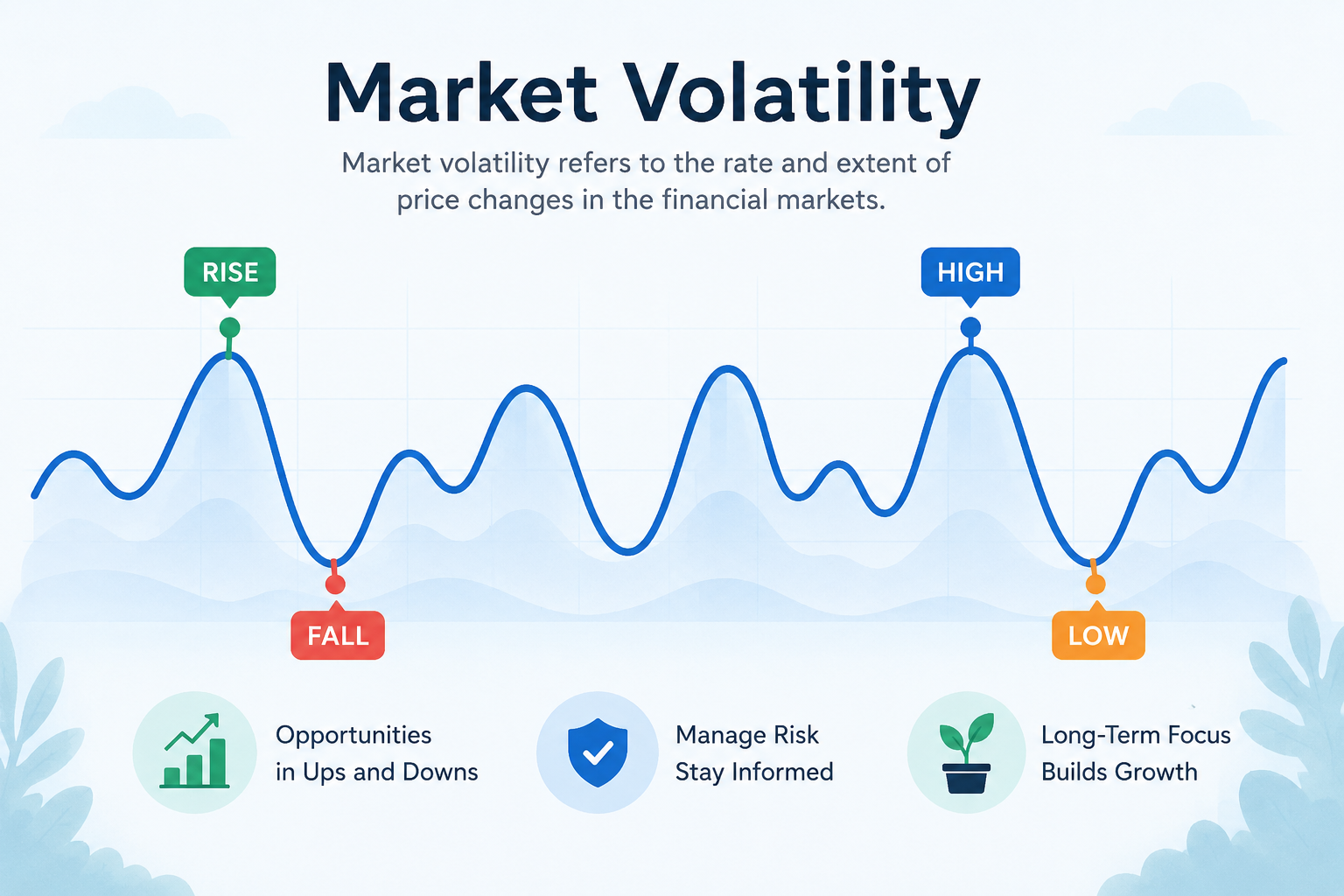
How Market Volatility Is
Reshaping Procurement Strategy
in 2026
Tariffs, energy shocks, and structural supply chain change have moved market volatility from a quarterly risk to a daily operating condition. For procurement leaders, this is not a temporary disruption — it is a permanent reset that demands a new playbook.
- Market volatility is now structural, not cyclical. 72% of senior trade professionals rank tariff volatility as their single biggest regulatory concern in 2026 — up from 41% a year earlier (Thomson Reuters Global Trade Report 2026).
- The old procurement playbook is now a liability. Single-sourcing, just-in-time inventory, and lowest-cost-country sourcing all reduce cost — and amplify fragility.
- Five volatility vectors hit simultaneously: trade policy, energy and commodities, logistics capacity, regulatory cost, and supplier solvency.
- Mid-market companies (€50M–€500M revenue) face a widening capability gap versus large multinationals that invested in resilience tooling during 2020–2024.
- The procurement function has new strategic influence — but only for leaders who can deliver scenario modelling, supplier risk intelligence, and clean spend data.
What Market Volatility Means for Procurement in 2026
For most of the last three decades, procurement professionals operated against a stable backdrop. Container freight was cheap, supplier networks were globally distributed, tariffs were predictable, and the dominant question was how to take cost out. Spend consolidation, single-sourcing for leverage, and just-in-time inventory were the prevailing orthodoxies. Resilience was a footnote.
That world has been dismantled in less than five years. A pandemic exposed how fragile the optimised model really was. A war in Ukraine reset European energy economics. A second wave of US tariff escalation has, in 2026, made trade policy itself one of the most volatile inputs into any cost model. Fresh disruption to oil and gas flows through the Strait of Hormuz has pushed the European Central Bank to revise its inflation outlook upward, with euro-area inflation projected to spike to around 3.1% in Q2 2026.
"Market volatility has become the baseline operating environment for procurement — and that changes everything about how the function should be designed, measured, and led."
The Five Vectors of Procurement Volatility
In a stable environment, "market fluctuation" referred mainly to the price line on a few commodities. Today, procurement teams are absorbing volatility across at least five distinct vectors simultaneously:
Tariffs, export controls, sanctions, and origin rules now move on executive timelines rather than negotiated treaty cycles. A landed cost calculated on Monday can be obsolete by Friday. Buyers who anchored their sourcing around long, settled trade relationships have discovered those relationships are now policy-dependent rather than market-dependent.
Oil and gas futures peaked near USD 90/barrel and €50/MWh in Q2 2026. Beyond energy, structural shortages are emerging in copper, refined metals, and DRAM memory. J.P. Morgan Global Research projects a US refined copper deficit of 330,000 metric tons in 2026, while DRAM prices could rise 70–100% year-on-year.
Carrier reliability hit historic lows in 2025 and has only partially recovered. Last-mile and cross-border parcel costs are rising. The control tower has gone from buzzword to operational necessity.
The EU's Carbon Border Adjustment Mechanism (CBAM) began its operational phase in 2026. France's e-invoicing mandate is reshaping P2P cycles. ETS2 (covering buildings and road transport fuels) is on the horizon for 2027–2028. Each adds compliance overhead without proportional headcount.
Higher rates, weaker demand in some sectors, and concentrated cost shocks have made supplier financial health a moving target. A "qualified" supplier on January 1st is not necessarily qualified on July 1st.
These vectors do not move independently. A tariff surprise on Chinese inputs ripples into commodity prices, freight booking patterns, supplier cash flow, and compliance documentation in the same week. That correlation is exactly what makes the current volatility environment so corrosive to traditional procurement playbooks.
Why Traditional Procurement Strategies Fail in Volatile Markets
For decades, the optimisation logic was straightforward: consolidate spend with fewer suppliers, negotiate down per-unit cost, hold minimal inventory, lengthen payment terms. Each move looked rational on a spreadsheet. Each one, today, increases fragility.
| Old Playbook | Why It Worked Before | Why It Fails Now |
|---|---|---|
| Single-source consolidation | Maximised buyer leverage and unit savings | Fails the moment that source sits behind a tariff line or closed shipping route |
| Just-in-time inventory | Minimised working capital | Production stops when lead times triple unexpectedly |
| Lowest-cost-country sourcing | Reduced unit price | Compliance risk can flip overnight by executive order |
| Lengthened payment terms | Improved buyer cash flow | Critical suppliers fail when every customer does the same thing |
The practices that drove career-defining savings between 2000 and 2020 are now actively dangerous in volatile markets. The discipline has to relearn its own craft.
How Procurement Operating Models Are Changing
Across consulting engagements in France, Canada, and internationally, the same five shifts keep surfacing. Together, they sketch the outline of a new procurement operating model for an era of permanent market volatility.
The relevant question is no longer "what is the cheapest option?" It is "what is the lowest expected total cost once I price in disruption probability, alternative-source switching cost, and compliance risk?" Thomson Reuters found 65% of organisations are actively changing sourcing patterns, 57% are renegotiating contracts, and 51% are pursuing nearshoring.
The argument for dual or triple supply is no longer philosophical — it is a hedging trade. Carrying a slightly higher unit price across two qualified sources is often cheaper than the option value of a single-source disruption. The challenge: qualifying a second source on technically demanding categories takes 6–18 months. Companies that started in 2022–2023 are now ahead.
Modern contracts now include explicit tariff pass-through clauses, indexed price adjustment formulas tied to commodity benchmarks, dual-currency provisions, triggered re-negotiation thresholds, and force majeure language updated for policy events — not just natural ones. Procurement is drafting these clauses, not legal.
A category strategy refreshed once a year cannot survive an environment where baseline assumptions shift quarterly. The leading practice is a living document with a defined trigger list — tariff change, supplier financial alert, freight rate breach, currency move beyond X% — that forces a structured re-review. The cadence is closer to monthly than annual.
You cannot run scenario modelling on tariff exposure if your spend data is fragmented across five ERPs, your supplier master is in three different states of completeness, and your contract terms are sitting on a network drive. The teams that handled the 2025–2026 shocks well were almost universally the ones that had invested — before the shocks hit — in clean spend classification, supplier hierarchies, and contract metadata.
The Mid-Market Procurement Squeeze
There is one further dynamic worth naming: the gap between large-cap procurement organisations and the mid-market is widening, not narrowing.
Large multinationals weathered the 2025 tariff shocks better than expected, largely because of investments made during COVID — control towers, dual sourcing, scenario tools, dedicated trade compliance functions. Mid-market companies — French ETIs and Canadian mid-caps in the €50M–€500M revenue range — typically lack those capabilities. They face the same volatility, but with a tenth of the headcount and without the enterprise software stacks that took larger players years to deploy.
The answer is not to attempt a scaled-down replica of an enterprise procurement transformation. That path is too slow, too expensive, and usually fails. The realistic answer is a focused capability stack — achievable in weeks, not years:
Know every euro of spend, by category, supplier, business unit and contract status — updated continuously, not quarterly.
Real-time solvency scores, dependency rates, and certificate tracking — so a January-qualified supplier doesn't become a July problem.
Model tariff changes, currency moves, and commodity shocks against your live spend and contract data before they happen.
Automated alerts on expiry, renewal, and obligation milestones — so volatility clauses are enforced, not overlooked.
The mid-market does not need a smaller version of what the CAC 40 buys. It needs a different shape of solution entirely.
A 4-Step Framework for Procurement Leaders in 2026
For procurement leaders rethinking strategy under current market volatility, four questions are worth working through — in order:
Map your top 50 suppliers by spend against country-of-origin and sub-tier dependency. Anywhere a single supplier (or single country) accounts for more than 30% of a critical category, that is a documented risk requiring a specific mitigation plan — not a vague intent.
Pull the top 20 contracts by value and stress-test them against a 10% tariff change, a 15% currency move, and a 20% commodity input shock. Renegotiate the ones that produce unacceptable losses first.
If you cannot answer "what is my exposure to copper price changes" or "what percentage of my spend touches a supplier in country X" within an hour, your data infrastructure is the bottleneck. That is the investment to fund this year.
Define the external signals that should automatically force a category review — in writing, with named owners and decision timelines. Volatility is manageable when responses are pre-rehearsed. It is overwhelming when each event triggers a fresh debate.
The Strategic Opportunity in Procurement Volatility
The most consequential shift in procurement right now is not technological — it is positional. Thomson Reuters' 2026 research found that 72% of trade professionals report increased influence at the executive level, with stronger involvement in procurement decisions and broader recognition as strategic partners. When tariff swings and energy shocks hit margin, availability, compliance, and customer commitments in the same quarter, leadership teams have no choice but to bring procurement into the room earlier.
That seat at the table is genuinely available now. But it has to be earned with capabilities procurement has not historically been measured on: scenario modelling, geopolitical literacy, contract risk allocation, and data infrastructure.
"The organisations and leaders that build those muscles in the next 12 months will exit this period of volatility considerably stronger than they entered it."
The organisations that wait for stability to return will discover, eventually, that stability was the anomaly. Volatility is the new baseline — and the procurement function that accepts that, structurally and operationally, becomes irreplaceable to its business.